by Lance Gurganus | May 13, 2022 | Auto Detailing Equipment, Detailing Business, Detailing Services, Specialty Services
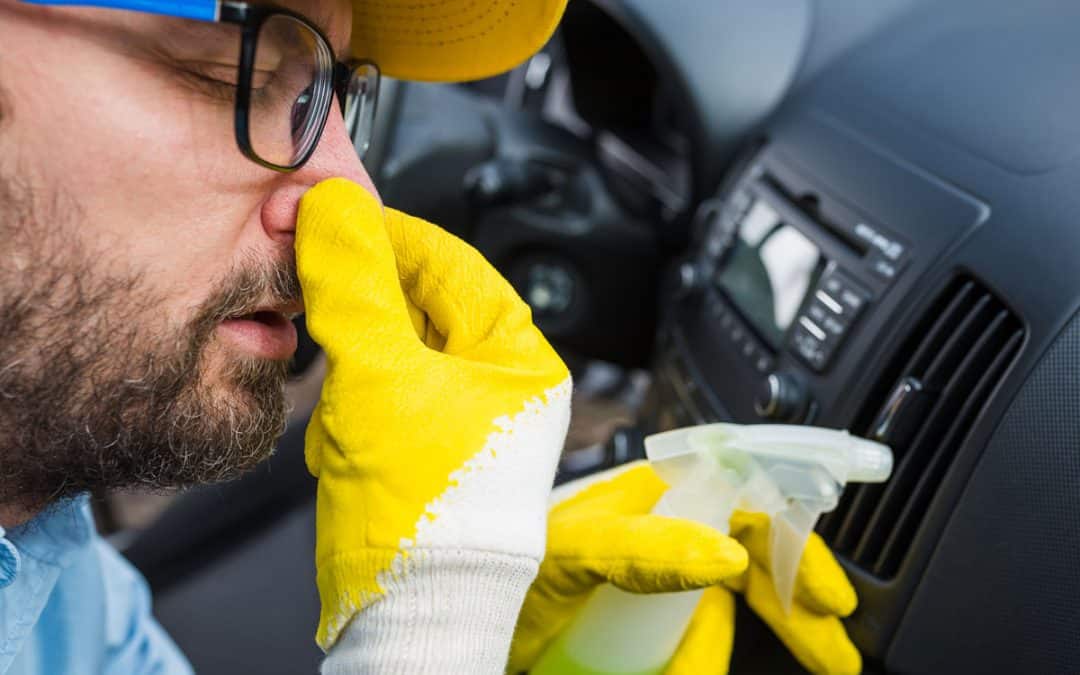
Ozone can help with a stubborn smell after the cleaning is done. It will not remove the cause. If the source of the smell is still in the car, the smell comes back. Ozone is also a lung irritant, so it has to be run the right way. Here is how detailers handle an odor job: find the source, clean it, then treat the empty car and air it out.
Why car odors hang on
A car interior is a small, sealed box full of things that soak up smells: carpet and pad, seat foam, headliner fabric, seat belts and the HVAC system. Odors usually come from one of these:
- Smoke. Tobacco and cannabis smoke leave a sticky film on glass, plastic, the headliner and inside the vents.
- Pets. Hair, dander and especially urine that soaks through the carpet into the pad.
- Mildew. Water from a leaking door seal, sunroof drain, cowl or heater core keeps the carpet pad damp.
- Food and milk. A spilled shake or a burger dropped under a seat track turns sour fast in a hot car.
- The HVAC system. A dirty cabin air filter and a damp evaporator core can make the whole car smell musty every time the fan comes on.
Step 1: Find the source first
Ask the customer when the smell started and where they notice it. Then check:
- Under and between the seats, the seat tracks and the seat-back pockets.
- Carpet and pad, especially the rear footwells and the trunk well. Press down with a dry towel. If it comes up damp, you have a water leak.
- The headliner and visors. Wipe a spot with a white towel and a little cleaner. Smoke film comes up yellow.
- The cabin air filter. Pull it and look.
- The vents. Run the fan on high, then on recirculate, and smell each one.
Standing water or a wet pad? Fix the leak and dry the car first. Ozone does not dry carpet, and a wet pad keeps growing mildew.
Step 2: Clean the source
Ozone is the last step, not the first. Do the real cleaning first:
- Vacuum everything, including under the seats and in the seat tracks.
- Hot water extraction of carpet and cloth seats. For pet urine and food, use an enzyme cleaner made for automotive carpet, give it the dwell time on the label, then extract. See our guides to auto carpet cleaning and cleaning car seats with household products. If the foam is damaged, see car upholstery repair.
- Wipe every hard surface on smoke jobs: dash, door panels, inside glass, seat belts pulled all the way out, and the headliner with a light touch so you don’t loosen the glue.
- Replace the cabin air filter and treat the evaporator with a product made for that job, following the label.
- Dry the interior with fans or the car’s heat before the ozone step.
After this cleaning, the smell is often gone and ozone is not needed. When the smell lives in the foam, the headliner or the ducts, ozone earns its fee.
What ozone is and why it works on odors
Ozone is a molecule made of three oxygen atoms (O3). It reacts with some of the chemicals that cause odors and changes them into other compounds. The U.S. EPA notes that ozone is used in unoccupied spaces for some odor jobs, such as fire restoration, and that conditions must be set so that no person or pet is exposed (EPA: Ozone Generators that are Sold as Air Cleaners).
The same EPA page warns that ozone reacts with some chemicals to form by-products, and that ozone can damage rubber, electrical wire coatings and fabrics. That is one more reason to use it in short, controlled sessions instead of leaving a machine running overnight.
How an ozone generator works
Most detailing units use corona discharge. An electric field splits oxygen molecules in the air, and some of them recombine as ozone. A fan pushes that air out. Units are rated by output in milligrams per hour (mg/h). A higher-output unit treats a car faster and leaves less room for error. For what to carry on a mobile rig, see mobile detailing equipment.
Step 3: Run the ozone treatment safely
Follow your machine maker’s instructions first. This is the general routine many detailers use.
- Empty the car. No people, pets or plants inside. Take out the customer’s personal items, child seats and anything fragile.
- Set up outside or in a ventilated bay, away from open doors to your shop, your office, and where people walk. Put up a sign or cone so nobody opens the car mid-cycle.
- Place the unit on the floor or on a towel on the center console, pointed into open space, not against upholstery. Some units can run outside the car with a hose through a cracked window; follow the maker’s setup.
- Run the HVAC on recirculate with the fan on low so ozone moves through the ducts, only if the maker’s instructions allow it. Use accessory power, never idle the engine in a bay or garage, and never with anyone inside.
- Close the doors and run a short cycle. Use the timer on the unit and the run time the maker lists for vehicle interiors. For heavy smoke, many detailers run two or three shorter sessions with airing out in between instead of one long session.
- Nobody gets in or stands next to the car while it runs.
- When the cycle ends, wait the re-entry time the maker lists, then open every door and the trunk from arm’s length and let the car air out for at least the time the maker lists. Run the fan on fresh air during this step. Don’t rely on your nose: EPA notes that your sense of smell for ozone fades fast and that no smell does not mean the air is safe. An ozone meter is the better check.
- Smell-check after airing out. If the original odor is still there, look for a source you missed before you run another cycle.
Why the rules are strict: ozone irritates the lungs even at low levels. OSHA’s workplace limit is 0.1 parts per million averaged over 8 hours, and NIOSH lists 5 ppm as immediately dangerous to life or health (NIOSH Pocket Guide: Ozone). The treatment works by holding ozone inside a sealed car, so the air in that car is not safe to breathe until it has aired out. Protect yourself and your crew the same way you protect the customer: stay out of the car until it has aired out.
What ozone does not do
- It does not clean. Dirt, stains, hair and urine stay put until you remove them.
- It does not fix a wet car. Stop the leak and dry the pad first.
- It is not a disinfection or sanitizing service. Don’t sell it that way. When ozone generators are sold to kill germs or viruses, EPA treats them as pesticidal devices. It does not routinely review their safety or effectiveness, so it can’t confirm they work against the virus that causes COVID-19. EPA also warns that selling devices with false or misleading claims can bring penalties under federal pesticide law, and that the claim “Kills COVID-19” is always considered false and misleading (EPA: Why aren’t ozone generators on List N?). Sell odor removal, period.
What ozone odor removal costs
Prices vary by market and by how bad the car is. An add-on to an interior detail costs less than a full odor package that includes extraction, headliner work and several ozone sessions. Shop current prices on commercial ozone generators before you buy.
Price the cleaning, not the machine time. The cleaning is most of the labor.
How to sell odor removal
Odor customers have a reason to act now: a used car they just bought, a trade-in coming up, a car someone smoked in, a dog that got sick on the back seat. They already know they have a problem, which makes them easy to talk to.
Sample ad copy:
Smoke, pet or mildew smell in your car? We find the source, deep clean it, then run an ozone odor treatment in the empty, sealed car and air it out before you pick it up. Call for a quote.
Do not add “disinfects”, “sanitizes”, “kills germs” or “kills viruses”.
Car dealers and used car lots also need odor work. See our page on auto reconditioning for working with dealers.
Frequently asked questions
How long should you run an ozone generator in a car?
Follow the run time your machine maker lists for vehicle interiors. Many detailers run short sessions and repeat with airing out in between for heavy smoke instead of running one long session.
Is ozone safe for a car interior?
Short, controlled treatments are common in detailing. EPA notes that ozone can damage rubber, wire coatings and fabrics, so avoid overnight runs and repeated long sessions.
How long after an ozone treatment can I drive my car?
Wait the re-entry time your machine maker lists, then open every door and air the car out for at least the time the maker lists. Don’t rely on smell to decide it’s clear. Nobody should sit in the car before then.
Will ozone remove cigarette smoke smell?
Ozone can help with smoke odor that has soaked into the headliner, foam and ducts, but only after the surfaces are wiped down and the cabin filter is replaced. Heavy smoke cars often need more than one session.
Does ozone kill bacteria and viruses in a car?
Don’t buy or sell ozone for that. EPA does not routinely review ozone generators for safety or effectiveness against germs, and it warns that false or misleading claims about these devices can bring penalties. Use ozone for odors only.
Why does my car still smell after ozone?
The source is usually still there: a damp carpet pad, urine in the foam, a dirty cabin filter or a wet evaporator. Find it, clean or fix it, then treat again.
by Lance Gurganus | Apr 29, 2020 | Detailing Services, Mobile Services, Specialty Services
Disclosure: This page has affiliate links. If you buy through them, Autodetailguide.com may earn a commission at no extra cost to you. As an Amazon Associate, we earn from qualifying purchases.
Why clean an engine bay (honest version)
A clean engine bay makes leaks easier to spot, looks better at sale/trade-in, and is standard on dealer lots. A cleaner bay may shed heat a bit better when heavy oil/dirt blankets are gone. Treat big MPG or “prolongs engine life” claims as possible side benefits, not promises.
Risk is real: water in the wrong place can create no-starts and expensive diagnostics. If you’re unsure, pay a pro or practice on a beater first (the old “Shop Dart” idea still works).
Disclaimer
You use these tips at your own risk. We are not responsible for damage to your vehicle. When in doubt, stop and get professional help.
Gear that helps
| Tool |
Role |
| Degreaser suited to engines |
Does the real work, so you need less water |
| Pressure washer with moderate PSI, low GPM |
Rinses without flooding |
| Or: garden hose used sparingly |
Possible, slower, still chemistry-led |
| Plastic bags + clips / purpose covers |
Air intakes, fuse boxes, sensors as needed |
| Soft brushes |
Agitate without tearing wires |
| Microfibers |
Wipe residual |
Hot water / “steam jenny” style washers speed degreasing when you have them. Cold water works if chemistry dwells properly.
Water rule: less is more
Home hoses often dump lots of gallons at low pressure. Light consumer pressure washers often run ~1.5–1.7 GPM at higher PSI, which is better for a controlled rinse if you keep your distance and avoid sensitive areas.
Rough working range many detailers use: about 1,000–2,000 PSI with low GPM and good degreaser. That is not a license to bury connectors. Closer isn’t always better.
Step-by-step (engine off unless you’re trained otherwise)
- Cool engine. Hot manifolds + cold water is a bad mix for people and parts.
- Photograph the bay so belts/covers go back right.
- Cover intakes, open electrical connectors, and sensitive boxes as needed.
- Apply degreaser per label; dwell without letting it dry into a crust on hot parts.
- Agitate heavy areas with a soft brush.
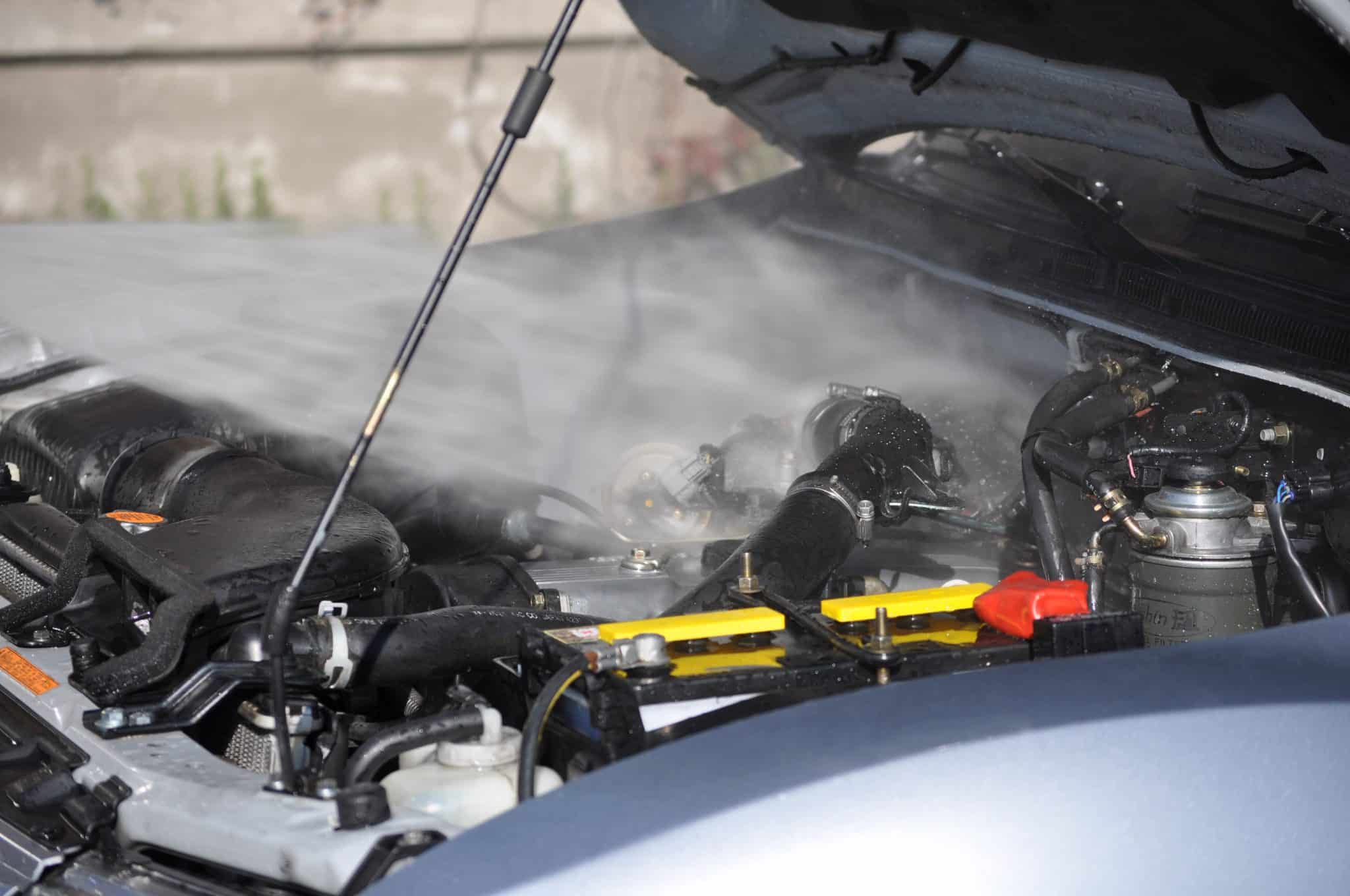
- Rinse lightly from a safe distance: short passes, not a flood.
- Uncover, wipe pools of water, leave the hood open to dry.
- Inspect for new drips after a short drive once fully dry.
Running vs not running
Shops have used both methods over the years. Stronger modern degreasers often mean less water, which reduces the temptation to run the engine during rinse. If you don’t have training and a practice car, keep it off, cover carefully, and rinse gently. No debate-winning claims here. Safety first.
Common mistakes
- Soaking the alternator / fuse box / open connectors
- Using dish soap habits that leave residue
- Point-blank wand on sensors and aftermarket electronics
- Cleaning a red-hot engine
- Skipping covers because “it looks sealed”
- Dressing belts/hoses with oily shine products that sling
Safety notes
- Eye protection and gloves.
- Watch for hybrid/EV orange cabling. If you see high-voltage markings and you’re not trained, do not spray that bay yourself.
- Never mix random chemicals.
- Dispose of oily rinse water per local rules. Don’t send it to the storm drain.
- Mobile operators: confirm customer OK; note pre-existing bay condition with photos.
Related guides

by Lance Gurganus | Apr 2, 2020 | Specialty Services
Once your trailer or van carries water, a pressure washer, a generator and good chemicals, you can clean a lot more than cars. Specialty jobs fill slow days, and many come from commercial customers who book on a schedule. Each one comes with its own rules. Here is what to check before you take one on.
Playground equipment
Schools, daycares, churches, apartment complexes, HOAs, parks and restaurants with play areas all have playground equipment that gets dirty: bird droppings, spider webs, mold and mildew on shaded parts, food and drink residue, and graffiti.
Rules for playground jobs:
- Follow the equipment maker’s maintenance and cleaning instructions. The Consumer Product Safety Commission’s Public Playground Safety Handbook says the manufacturer’s maintenance instructions and inspection schedules should be strictly followed (CPSC Publication 325). Ask the owner for the maker’s name and look up the care guide before you quote.
- Never wax, polish or coat slides, steps, decks or climbing surfaces. Anything that makes a surface slicker changes how fast a child moves and how well they can hold on. Leave surfaces as the maker made them.
- Use low pressure and a wide fan tip on plastic, and keep the wand moving. High pressure can etch plastic, strip paint and powder coat, and blow loose-fill surfacing like mulch or rubber chips out of place.
- Don’t disturb the surfacing. CPSC stresses that loose-fill surfacing has to stay at its required depth, especially under swings and at slide exits. If your work moves mulch or rubber, rake it back and tell the owner.
- Rinse thoroughly so no cleaner residue is left where kids put their hands and mouths.
- Report, don’t repair. If you see loose bolts, cracks, sharp edges or missing parts, write them down with photos and tell the owner the same day. Unless you are trained and certified to inspect playgrounds, you are a cleaner, not an inspector. Say so in your contract.
- Keep records. CPSC recommends keeping signed and dated maintenance records. Give the owner a dated service report with before and after photos for their file.
- Close the area while you work with cones and tape, and work when kids are not there.
If the customer asks you to “sanitize” or “disinfect”: that is a pesticide claim. Only use a product registered with the EPA for that use and surface, follow the label directions exactly (including dwell time and any rinse step for surfaces kids touch), and only describe the result the way the label does. Don’t promise that the equipment is germ-free. Many states license people who apply pesticides, including disinfectants, for hire. In Pennsylvania, applying them on someone else’s property or on a public playground generally requires a commercial applicator certification and a pesticide business license (7 Pa. Code §128.41). Check with your state agriculture department before you sell sanitizing. (EPA: selected registered disinfectants)
Indoor play areas (restaurants, family fun centers, trampoline parks) get cleaned more often, usually without a pressure washer: vacuum, wipe, and use the cleaner the maker approves for its padding and netting. After-hours service on a schedule can suit a detailer with flexible hours.
Mini golf courses
Outdoor mini golf carpet collects dirt, leaves, gum, spilled drinks and algae in shaded holes. Cleaning it is a lot like cleaning a big outdoor rug:
- Blow off leaves and debris first.
- Use a surface cleaner or a wide fan tip at moderate pressure, held at an angle so you don’t lift the carpet seams or the glue. Test a corner.
- Use a cleaner safe for synthetic turf, rinse well, and keep wash water out of ponds and water features.
- Clean the borders, rocks and obstacles while you are there.
- Offer a spring opening clean and a mid-season clean as a package.
Other specialty jobs that fit a detailing rig
Ask how they clean it now
Start the sale with one question: how does it get cleaned today? Common answers include “the maintenance guy hoses it off once a year” or “we don’t.” Show photos of your work, hand over a short written scope, and offer a schedule.
How to price specialty cleaning
There is no standard price list for these jobs. Rough ways operators price them (estimates only; your market will differ):
- By the hour plus chemicals and travel for small or odd jobs.
- By the job for playgrounds, priced off the size of the structure and how dirty it is.
- By the season for mini golf and recurring indoor play areas, with a set number of visits.
Walk every job before you quote it. Count the time to set up, protect the area, clean, rinse, clean up and write the report.
Insurance and paperwork
- Tell your insurance agent about every new service line. Playground, mini golf and pressure washing work can fall under different class codes than auto detailing, and your general liability policy may not cover work it doesn’t list. See auto detailing liability insurance.
- Expect commercial customers to ask for a certificate of insurance and sometimes to be named as additional insured.
- Use a written scope that lists what you clean, the products you use, what you don’t do (inspection, repair), and how you handle wash water.
Wash water
Wash water with dirt, droppings and cleaner should not run into storm drains. Many local rules prohibit it. Use mats or berms to collect it, use a vacuum recovery system where needed, and ask the property owner where it can be discharged. The EPA’s guidance on vehicle and equipment washing is a good starting point (EPA BMP: vehicle and equipment washing).
Frequently asked questions
Can you pressure wash playground equipment?
Often, yes, at low pressure with a wide fan tip, if the equipment maker’s care instructions allow it. Test first, keep the wand moving, and don’t blast loose-fill surfacing out of place.
Should you wax or polish a playground slide?
No. Never wax, polish or coat slides, steps or climbing surfaces. Clean them with the maker’s approved cleaner and leave them as the maker designed them.
What should I use to sanitize playground equipment?
Only an EPA-registered product labeled for that surface and use, applied exactly as the label says, including dwell time and any rinse step. Many states, including Pennsylvania, require a pesticide applicator license to apply disinfectants for hire, so check your state’s rules first.
How do you clean outdoor mini golf carpet?
Blow off debris, then use a surface cleaner or wide fan tip at moderate pressure with a turf-safe cleaner. Test a corner first, and rinse well without sending wash water into ponds.
Do I need different insurance for specialty cleaning?
Tell your agent about each new service. Playground, mini golf and pressure washing work can carry different class codes than detailing, and your policy may not cover work it doesn’t list.

by Lance Gurganus | Mar 31, 2019 | Specialty Services, Commercial Services
If you run a mobile detailing rig, you already carry a pressure washer, water, a generator and chemicals. That makes some pressure washing jobs an easy add-on, especially on slow days. Pick the jobs that fit your rig, price them like a business, and settle wash water and insurance before the first bid.
Pressure washing jobs that fit a detailing rig
- Restaurant sidewalks, entrances and drive-thru lanes. Gum, spilled drinks and grease build up fast. This work can be scheduled on a recurring basis.
- Dumpster pads and grease bin areas. Dirty, smelly and recurring. Wash water rules matter most here (see below).
- Storefronts and lower walls of strip centers and office buildings.
- Awnings (with the right low-pressure method and cleaner for the fabric).
- Fleet trucks, trailers and equipment. Close to what you already do. See heavy equipment cleaning.
- Residential driveways, patios and walkways when you are already at a customer’s house for a detail.
- Playgrounds and mini golf with the right method. See specialty cleaning services.
Jobs to leave to full-time pressure washing companies
Some jobs look easy and aren’t:
- New concrete. It can scar and etch.
- Brick cleaning on new construction. Mortar and brick damage easily, and the cleaning chemicals are hazardous.
- Large shopping center and parking lot flatwork. Long overnight hours behind hot-water surface cleaners, with recovery equipment many detailers don’t own.
- Roofs and second-story house washing. Ladders, fall risk, and soft-wash chemistry that is its own trade.
- Anything that needs acid or harsh restoration chemicals you aren’t trained and equipped to handle.
Take the jobs your equipment and your skills can handle.
Equipment notes
- Flow matters as much as pressure. Many detailing pressure washers are sized for cars. Flatwork goes faster with more gallons per minute and a surface cleaner attachment.
- Hot water cuts grease on dumpster pads and drive-thrus. If you only have cold water, price in more time and degreaser.
- Tips: use wide fan tips (25 or 40 degree) on most surfaces. Never use a 0-degree tip on wood, siding, vinyl, awnings or anything soft. Test in a hidden spot first.
- Water supply: ask before you hook up to a customer’s spigot, and carry your own water if you can.
- Safety gear: eye protection, gloves and boots on every job. Never point the wand at a person or pet, and keep people out of your work area. A pressure washer stream can cut skin.
Wash water: where it goes matters
Wash water from pressure washing picks up dirt, oil, grease, food waste and cleaning chemicals. In most places it is not allowed to run into storm drains, which usually flow straight to creeks and rivers without treatment. EPA’s stormwater program and its guidance sheet for municipal vehicle and equipment washing call for keeping wash water out of storm drains and capturing it for proper disposal (EPA NPDES stormwater program; EPA BMP: vehicle and equipment washing).
In practice:
- Block or cover storm drains near the job with drain covers or berms.
- Use a water recovery system or wet vac for dumpster pads, grease areas and anything with oil.
- Ask the property owner where wash water can be discharged (often a sanitary sewer drain or grass area, if local rules allow).
- Use the least amount of chemical that works, and pick biodegradable products where you can.
- Check your city or county rules before you bid commercial work. Rules vary, and some cities fine contractors directly.
Insurance: tell your agent before you start
Pressure washing can cause expensive damage: stripped paint, etched concrete, water forced behind siding, broken windows, injured bystanders. Insurers price it differently than auto detailing. Before you take your first job:
- Tell your insurer you are adding pressure washing and roughly what share of your revenue it will be. It can change your class code and premium, and a policy may not cover work it doesn’t list.
- Expect commercial customers to ask for a certificate of insurance, and sometimes to be named as additional insured.
- See auto detailing liability insurance for the coverage detailers carry.
How to price pressure washing
Pressure washing is usually priced by the square foot for flatwork, by the job for houses and small areas, and by the hour for odd jobs. Published homeowner price guides give reference points (estimates only; your market will differ). HomeGuide’s pressure washing cost guide (April 2024) lists (HomeGuide):
- Driveway: about $100 to $260
- House siding wash: about $170 to $360
- Simple cold-water concrete cleaning: about $0.08 to $0.20 per square foot, rising to about $0.25 to $0.35 for greasy concrete with hot water and detergent
- Hourly rates: about $50 to $200 per hour
Bid checklist:
- Measure the area. Don’t guess.
- Note the soil: dirt, gum, oil, grease, mildew, rust.
- Decide hot or cold water and which attachment.
- Plan wash water containment and add the time and equipment to the price.
- Count travel, setup, cleanup and a minimum charge.
- Put it in writing: scope, price, what is not included, and how you handle wash water and pre-existing damage.
Be competitive, but don’t try to win on price alone. Explain why your price is fair: you are already set up and nearby, you are insured, and you work on their schedule.
How to sell it
- Stop by restaurants and stores on routes you already drive. Bring a one-page price sheet and your certificate of insurance.
- Look professional: logo shirt, clean truck, written estimate on the spot.
- Offer recurring service (monthly or quarterly dumpster pads and entrances) at a set price.
- Ask detailing customers if they want their driveway or walkway done while you are there.
Frequently asked questions
Can a mobile detailer offer pressure washing services?
Yes, many do. Start with jobs that fit your rig, like sidewalks, dumpster pads, storefronts and fleet trucks, and tell your insurer before you take the first job.
How much should I charge for pressure washing?
Flatwork is usually priced by the square foot and houses by the job. HomeGuide lists driveways at about $100 to $260 and house washes at about $170 to $360. Measure every job and price in travel, setup and wash water handling.
Can pressure washing water go into the storm drain?
In most places, no. Storm drains usually flow untreated to local waterways. Contain wash water, ask the owner where it can be discharged, and check local rules.
Do I need separate insurance for pressure washing?
Tell your agent you are adding it. Pressure washing can carry a different class code and premium than detailing, and your policy may not cover work it doesn’t list.
What pressure washing jobs should a detailer avoid?
New concrete, brick on new construction, roofs and second-story houses, large overnight parking lot jobs, and anything that needs acid or restoration chemicals you aren’t trained to use.