Paint Chip Scratch Repair

Paint Chip Scratch Repair

Disclosure: This page has affiliate links. If you buy through them, Autodetailguide.com may earn a commission at no extra cost to you. As an Amazon Associate, we earn from qualifying purchases.

First: diagnose the damage

Not every “scratch” needs paint.

What you see Likely level Typical DIY path
Light scuff; fingernail doesn’t catch Clearcoat / surface Wash → polish/compound carefully
Fingernail catches; color still there Deeper clear / light color Fine polish; stop before burning through
Primer or metal showing; stone chip Color coat / substrate Touch-up paint system; rust watch on metal
Cracked bumper plastic / deep gouge Structural / texture Pro bumper repair or body shop

Body shops are right for big panels and structural work. Detail and reconditioning shops (including many mobile operators) often handle small chips, scuffs, and bumper refinish faster and cheaper, when they’re actually skilled at color match and spray technique.

Small chip and scuff repairs usually cost far less than replacing and painting a bumper. Get written local estimates.


DIY: light scratches & scuffs (no bare metal)

  1. Wash and dry the panel.
  2. Clay if bonded grit is present.
  3. Try a quality polish on a microfiber or foam applicator. Start with a small area.
  4. If needed, a finer cutting compound, then refine with polish.
  5. Wipe and inspect in good light.
  6. Protect with wax/sealant/ceramic product you already trust.

Stop if color thins, white haze won’t wipe off, or you hit primer. You’re now in paint territory.


DIY: stone chips (color showing)

  1. Wash; remove loose edges carefully.
  2. If bare metal, address rust per product system before sealing.
  3. Use correct color code touch-up (door jamb sticker). Apply base, then clear if the system calls for it.
  4. Tiny brushes / pens: thin layers beat blobs.
  5. Level carefully only when cured (wet-sanding and polishing are advanced, and it is easy to make a bullseye).

When to call a detail / reconditioning pro

  • Bumper corner smashed or textured plastic torn
  • Chip clusters across a hood (time vs appearance tradeoff)
  • You’re selling soon and need blend quality
  • Clearcoat failure / peeling (bigger than a chip)

Ask about insurance coverage before they take the car. See our liability and garage keepers pages below. Photos of “before” protect everyone.


Shop / mobile operators (short)

Adding bumper scuff and chip repair can raise ticket size, but only after real practice on mixing, spraying, masking, ventilation, and respirator use. Subcontracting to a specialist while you sell the job is how many shops started. Don’t sell “like new” until you can deliver it.


Safety notes

  • Respirator and ventilation for spray work are not optional.
  • Wet-sanding and compounding generate dust/slurry; eye protection.
  • Don’t grind into airbag covers or sensor panels blindly.
  • Dispose of solvent waste properly.

Related guides


Highway Paint Removal

Highway Paint Removal

Car washing.A man cleaning wheels using high pressure water jet at car wash station.

Pressure Washing Interior Wheel wells to remove highway paint splatter

One of the absolute joys we get to experience living in the Northeast United States is the ever growing number of construction projects that get started as soon as the weather warms-up. This allows us to experience the next joyful experience of highway paint removal off cars.

So after a hard days work and an even harder trip through one of the many detours established for our convenience, isn’t it wonderful to discover “fast drying” heavy duty highway line paint all over your wheel wells and rocker panels? You get your choice of either white or yellow. Either way, the paint is designed to dry fast, only problem is it doesn’t seem to dry fast until it gets picked-up by your tires and splattered all over your car.

Click Here for more detailed info on Paint Overspray Removal

Highway Paint Removal

Start with the gentlest method that works and step up only if you need to. The sooner you get after fresh road paint, the easier it comes off.

  1. Rinse and wash. Rinse the wheel wells, rocker panels and lower doors, then wash with car wash soap so you are not grinding grit into the paint.
  2. Soften the paint. Use a road paint or tar remover made for automotive finishes and follow the label for dwell time and which surfaces it is safe on. Heavy splatter in the wheel wells may need two or three rounds. A pump sprayer with chemical-resistant (Viton) seals makes this easier if the label allows spraying.
  3. Rinse the wheel wells. A 25-degree nozzle (usually the green tip) at about 2,000 psi works well on the rough plastic and undercoating in the wheel wells. Keep the wand moving and stay back from wiring, sensors and brake parts.
  4. Go easy on painted panels. Do not try to blast splatter off paint. After the remover softens it, lift it with a plastic razor blade held flat, or with detailing clay and plenty of clay lubricant.
  5. Finish and protect. Wash again to remove remover residue, check the panels in good light, polish out any light marring, then put wax or sealant back on.

Protect Yourself and the Finish

  • Wear chemical-resistant gloves (nitrile works for most removers) and safety glasses or goggles.
  • Work in the shade on cool panels, with good airflow.
  • Keep removers off rubber trim, unpainted plastic and fresh paint unless the label says they are safe there.
  • Test any product on a hidden spot first.

Watch the Pressure on Painted Surfaces

Depending on the pressure washer and the age of the paint, a close blast can lift your car’s own paint along with the road paint. Keep the high-pressure work in the wheel wells. On painted panels, switch to a wider fan tip, such as a 40-degree (white) tip, back off the distance, and let the remover do the work. If the paint has cured for weeks, covers whole panels, or the remover is not touching it, stop and call a detailer who does this often. More pressure and harsher chemicals are how a splatter problem turns into a repaint.

What does it cost to have it done? As a rough estimate, professional highway paint removal often runs about $150 to $550 or more, depending on how much paint is on the vehicle and how long the job takes. Get a written quote, and ask whether the shop carries garage keepers coverage before they take your car.

We hope you enjoyed this “how to” tip sheet.

Suggested Pages to Check Out

Detail Shop Liability Insurance Page with Info on Garage Keepers Liability Coverage

1099 Contractors and Other Detail Shop Tax Issues

Go Back To Home Auto Detailing Step-by-Step Page

Paint Chip Scratch Repair

Paint Chip Repair

Scuffs, minor scratches, paint flaking, bumper scuffs, and deep scratches. All of these kinds of minor damage can be repaired without the services of a body shop. A paint chip repair can have your vehicle looking like new most times in less than a day.

Paint Chip Repair

Compare a detail shop’s micro paint chip repair and touch-up services to those of a local body shop and the advantages to staying far away from a body shop are obvious:

paint chip scratch repair

  • Cost: body shops replace damaged parts with new and paint them, dramatically increasing your costs. As an older example, a new bumper plus paint at a body shop could run around $700, while a micro paint chip repair or touch-up on that same bumper ran roughly $180 to $250. Prices have changed and vary by area, so get written local estimates.
  • Time: A Micro Paint Chip Repair Touch-up Service takes less than a day to complete. Try getting a body shop to do anything on your vehicle in less than a day. The time savings is obvious!

Scuff and Scratch Removal

Many times paint chip repair, and touch-up may not even be necessary. See our scuff and scratch removal page for more information on this service before you consider paint touch-up, chip repair or additional damage repair. You, the consumer, should exhaust all of your possible options for the inexpensive repair of your vehicle.

Handled Quickly and Efficiently as Part of a Full-Service Detail Package

Where do these scuffs mostly show up? Most of the times where any high traffic contact exists, such as door handles and places like the gas door where the car is accidentally bumped or brushed with the gas pump nozzle or handle. Bumper scuffs also happen by brushes with other vehicles and walls. These can be handled quickly and efficiently as part of a full-service detail package.

Do you want this service performed in your area? Make sure you review our Proper Insurance page to find a list of questions to ask about insurance before you agree to have the work done.

We hope you enjoyed this “how to” tip sheet.

Car Upholstery Repair

Car Upholstery Repair

If you’ve had a vehicle for any length of time, it’s inevitable that you’ll eventually experience wear and tear damage to your vehicle upholstery.

It could be a rip in your vinyl seat, a cigarette burn, fraying vinyl or leather armrests, the possibilities are endless.

As are the car upholstery repair options available to fix these problems.

People are Keeping Cars Longer

New cars cost more than ever.

So it’s only natural that people are keeping cars longer than in past years.

Over time, wear and tear on car upholstery starts to become a problem that needs fixing.

And not only because of aesthetics.

Worn or delaminated vinyl and leather car upholstery not only looks bad, but it also feels horrible. And sometimes it hurts.

Did you ever get into a vehicle and rest your elbow onto an armrest as hard, frayed, pointy vinyl poked your skin?

Fixing car upholstery damage is sometimes referred to as leather and vinyl repair.

Regardless of what it’s called, as auto reconditioning services go, car upholstery repair is a steady, in-demand service.

car-upholstery-repair-leather-vinyl-repair-AutoDetailGuide

Leather and Vinyl Car Upholstery Repair

A good auto reconditioning technician can repair virtually any type of material, from leather and vinyl to velour or fabric.

The nice part of leather and vinyl car upholstery repair is the flexibility in choosing the type of work to be done. It doesn’t always have to be repaired to ‘like new’ condition.

Sometimes making it look new will make the rest of the car look bad.

Whether it needs fully rebuilt, or simply touched up, the tech can easily make that decision after visual inspection of the damage.

And they can offer the customer more than one option based on their budget or overall condition of the rest of the vehicle.

Either way, most of the time the repair is actually stronger than even the original surrounding upholstery material.

Many parts of the car that are covered in leather or vinyl upholstery can be repaired rather than replaced.

From car seats and armrests to vinyl and leather dashboards and headrests. Replacement of these items should be a last resort if for no other reason than cost. It’s expensive to replace a worn armrest. And a dashboard cost is ridiculous.

Car upholstery repair of damaged leather and vinyl is generally the fastest and least costly way to go.

How much is the cost for car upholstery repair?

Depending on the severity of the damage, the cost for car upholstery repair ranges depending on both the severity of the damage and the type of upholstery material needing repair. For example, a one-inch tear in a vinyl seat might take an hour to repair and, as a rough past example, cost $50 to $70. While an armrest that’s covered in frayed or split leather might take one to two days depending on dry time and cost a few hundred dollars to fix.

It’s worth remembering that the cost of car upholstery repair is nothing when compared to the replacement cost of a seat, dashboard, or armrest.

As always make sure the technician is insured before beginning work on your vehicle.

Check with your local Detail shop

Before you decide to get a damaged car seat replaced, check with your local detail shop first.

Many detail shops have in-house reconditioning services. So call around and ask about car upholstery repair services. Most cities and even smaller towns have at least one shop that offers these types of services.

We hope you enjoyed this overview of Car Upholstery Repair and Leather and Vinyl Repair Tips.

Suggested Pages to Check Out

Detail Shop Liability Insurance Page with Info on Garage Keepers Liability Coverage

1099 Contractors and Other Detail Shop Tax Issues

Go Back To Home Auto Detailing Step-by-Step Page

Bumper scratch and scuff repair

Bumper scratch and scuff repair

Bumper Scratch and Scuff Repair

As a detail shop business owner, the question you need to ask is why should I add any additional services other than detailing and washing cars. Why add bumper scratch and scuff repair services?  Why add paint chip repair? Why? It’s simple, actually. Profits. The lifeblood of any business. Just like profits, detailing businesses need additional profit centers to survive.

Detailing Shops Need Additional Profit Centers to Survive

Detailing services are considered a commodity business. I don’t care how good you are or how loyal you believe your customers are. There is always going to be somebody out there running a business out of their home that can undercut your prices. If you rely on your current customers or pricing levels, you are setting yourself up for failure. Detailing shops need additional profit centers to survive and hedge their bets against business downturns and pricing pressure.

There are so many things that can happen to cars while they are driving that the possible ways for you to improve profits in your shop become almost endless.  The issue though is time and money with the learning process.  You need to learn how to do bumper scratch and scuff repair services before you can offer it to customers and make sure you are doing it perfectly.  Detailing a car is one thing, but when you tell a car owner that you are going to make their scratched and scuffed-up bumper look new again, you better be able to perform as expected.  Otherwise, your reputation will suffer and so will your bank account if you end up having to pay another business to fix your work.

The great part about having so many options is that you get to pick and choose the services that you want to offer.  One of the things

painting a bumper scratch repair

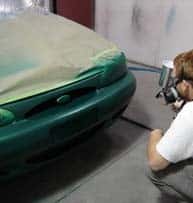
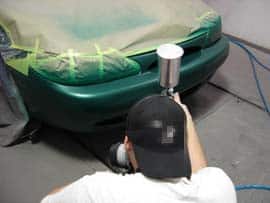
that we did in our shop was simply found in local one-man operators that did the service that we were looking for and then add that to our offered services list. This got our name out there as being an expert in this area even though we weren’t actually the ones performing the work.  As you can see from the picture at the right, adding Bumper Scratch and Scuff Repair services is not something you can just decide to do overnight.  You need to get some training on a few things, but mainly these primary areas of skills development:

  • First and foremost, you need to get great at properly mixing paint for the exact color match to the car you are painting.  This is harder than it sounds because even the tiniest percentage off in mixing the paint and your bumper scratch and scuff repair won’t match the rest of the car.
  • Second and just as important, you need to practice spraying techniques to get your proper spraying pattern down.  Spray too heavy and it will run.  Not enough and you will need to go back and recoat several more times.  Another problem area when spraying is applying too light a coat and then recoating several times after with the same density.  This results in an almost powder coating type texture like a lot of outdoor furniture.  Obviously none of these results will sit well with your customer.  They are paying you for perfection and in their minds a bumper scratch and scuff repair will look like that section of their car is brand new again.

There are other areas that you will learn as you get trained on the proper ways to do the bumper scratch and scuff repair services, but issues like masking the car properly, having adequate ventilation and lighting, using the right sprayer and always wearing a respirator are a few that come to mind as being important.

One of the things that just amazed me was how much more credibility and respect we started getting from local dealers and our own clients when we added these specialty bumper scratch and scuff repair services.  It was like we were “just detailers” before, but now we can do things that a limited number of other people in town could do well.  I also immediately noticed the quality and experience levels of job applicants at our shop improved dramatically because we advertised all of our services, including specialty add-ons like bumper scratch and scuff repair services and the fact that we provide on-the-job training.  Employees will take a pay cut for things like quality training and even moreso for benefits.  This also greatly improved our shop profitability. Back then I could add a $300 bumper scratch and scuff repair charge to a $150 detail (past shop prices, not current quotes), and my margins went way up.  Supply costs are basically just the paint, some mixing equipment, sprayers and a larger compressor than you probably use now unless you have all air buffers, which usually isn’t the case.

bumper scratch and scuff repair painting in progress

I could probably write for days on this subject. If you want to try small repairs yourself first, start with our paint chip and scratch repair guide.

Thanks for stopping by.

Auto Reconditioning

Auto Reconditioning Services

Detailing businesses have to adapt when the economy slows.

Sadly, the idea of simply doing a good job detailing customer cars is not enough anymore.

People want a “good deal” but they also don’t want to deal with the hassles of finding different companies to provide different services.

Time is money as they say and with the overworked consumer, many of your auto detailing customers just don’t have time to bring their car to different companies for servicing.

This is where you can benefit incredibly by adding Auto Reconditioning Services to your existing auto detail shop or mobile detailing business. Auto Reconditioning Services are “specialty” services that can dramatically improve your profitability.

Unfortunately, most of your customers don’t realize how much work goes into great detail.

Otherwise, they wouldn’t consider getting it detailed from the fly-by-night guy that operates out of his home in their neighborhood. Those are the people you are competing with. And one of the basic things you need to understand about the detailing business is once you decide to go down the path of competing on price, you will never recover.

You will forever be known as the discount detail guy and you might as well add a car wash to your business. So instead of cutting your throat by lowering your prices, why not add some services that your customers will gladly pay for?

As far as your customers are concerned, these are all services that only “experts” can offer. I’m talking about auto reconditioning services such as :

Micro Paint Chip Repair

Bumper Painting and Scratch Repair

Interior Repair for Leather, Vinyl and Upholstery

Carpet Burns Repair and Carpet Dyeing

Paintless Dent Repair

Window Tinting Installation and Removal

Windshield Repair

And More…

Adding these auto reconditioning services won’t cost you a massive investment of time or money. Most of the time you spend will be simply perfecting your skills, just like you already do with your buffing and other specialty services that you offer now.

The difference you will notice is how much more money your customers are willing to pay for these “specialty” auto reconditioning services versus your standard services.

These types of services are very profitable and will provide you with the added income and profits that your business needs to thrive in any economy.