by Lance Gurganus | Dec 10, 2021 | Heavy Equipment Cleaning, Commercial Services, Mobile Services
Construction companies always have problems with their heavy equipment cleaning needs. So why not help them with it?
As part of your detailing business, you have most of the equipment you need to be a highly sought-after heavy equipment cleaning company for local construction companies. It’s highly profitable and most construction companies will pay you onsite. If you aren’t already doing this, you need to start.
Cleaning Heavy Construction Equipment
Construction companies rely on heavy equipment to do their job. It’s difficult to dig, move tons of dirt, and build structures without the use of large construction equipment.
But that equipment gets dirty. Constant daily use means more wear and tear.
High-pressure lines blow and cover engines and radiators in thick mixtures of hydraulic fluid, oil, grease, and caked-on dirt. This build-up restricts airflow through the radiator, causing the engine to overheat.
Radiators can’t cool engines if the airflow is blocked by dirt and grime. Engines run badly when they are covered in similar grime and engine fluids. Oil pans need degreasing after the engine oil is changed. Heavy equipment runs constantly and needs maintenance to do so. But mechanics don’t generally clean the machines, they just work on them.
It’s up to professional heavy equipment cleaners to handle this part of keeping equipment running.
Heavy Equipment Cleaning
You’ve got a pressure washer, degreasers, cleaning chemicals and supplies, even buffers if they want them shiny. It’s a profitable niche business that you will enjoy doing. Now it does benefit you to look into hot water pressure washers or a steam generator that can create enough high-pressure steam to melt grease. Adding these high-end pieces of equipment to your arsenal will make you a powerful competitor in your local heavy equipment cleaning market. Using these will also increase your business many times more than your competition.
Profitable Niche Business
Heavy equipment cleaning can be a profitable niche business like pressure washing and similar add-on services. Basically it isn’t your main source of income so you can afford to give some good deals out when you are a little slower. Pricing varies by machine and by how dirty it is. In my shop days we charged roughly $125 to $350 or more per unit. Those are past prices, so check local rates before you quote. It really just depends on exactly what level of cleaning your customer expects since time is money and you need to complete several of these per job.
The Key to Success is Flexibility and Options
Keep in mind that this level of heavy equipment cleaning isn’t detailing an entire bulldozer or crane. The owner of a construction company generally isn’t concerned if his equipment has some dirt and mud on it. That’s what these things are used for. What does concern them is the machine breaking down because of dirt, mud, grease, and anything else that gets stuck in the radiator, half-tracks, wheels, etc. They want you to arrive at the worksite and clean their equipment when they aren’t working. This is usually at night or early morning. The key to success is flexibility and options when dealing with heavy equipment owners. Every hour that heavy construction equipment is down due to maintenance problems is costing the company owner thousands of dollars.
Maintenance Cleaning
Understand that I’m talking about the “maintenance cleaning” side of heavy equipment cleaning services in this article. Your customer might ask you to fully detail a piece of equipment that they are selling at auction or trading in on another piece of equipment. That is a completely different service and you would charge much more for that. I would do this frequently for several of my clients and charged anywhere from $1,500 to $4,000 back then, depending on the level of detail that they needed.
This level of heavy equipment cleaning is for the majority of your potential construction company customers who are simply interested in getting their equipment “maintenance cleaned”. The main thing they are looking for when it comes to heavy equipment cleaning is services:
Steam Cleaning the Radiator
“Blowing the rad” aka steam cleaning the radiator is a highly specialized cleaning service. This is where the heated pressure washer if you spent the extra money on it, comes in very handy. You crank up the heat, lower the pressure and douse the radiator with degreaser while spraying it down with superheated water.
Radiators overheat when they are covered with grease and debris from the engine. So this type of cleaning is needed at least every few months or more often for heavily used equipment. The thing to watch when you are cleaning radiators is to keep the pressure low enough so that you aren’t blowing off the “fins” of the radiator. Fins are needed to allow airflow and keep the radiator cool which in turn cools the engine. If you accidentally do blow off the fins, you might end up having to buy the company a new radiator which sometimes can run as much as several grand.
Cleaning The Pan
The rest of the equipment can be cleaned in the same manner, but it’s much faster cleaning the grease off the engine and the body of the equipment because you don’t have to be quite as careful as you do with the radiator. Cleaning the pan is another specialized service. Advance warning, it’s extremely dirty work. The guys who operate the equipment will unbolt or lower the oil pan underneath the heavy equipment. You then load it up with degreaser and spray it with as much superheated water that you can find. It blows back and covers the guy cleaning it. We always wore big hazmat suits with respirators and masks when we did this work. We usually gave this job to one of our newbies. It was our trial by fire. If they stayed on working with us after cleaning the pan, then we knew they were keepers.
One more thing about the wash water. Oily, greasy runoff from equipment cleaning can’t go down a storm drain. Check your local and state rules before the first job, and use a wash pad, containment mat or water recovery system so the water can be collected and disposed of properly. EPA’s vehicle and equipment washing guidance is a good starting point.
If you don’t have a heated pressure washer available, you can do heavy equipment cleaning work with a standard cold water pressure washing unit. The only problem you run into is it is definitely harder work without hot water and it takes a lot more degreaser and cleaning chemicals. More chemicals equal more cost which will cut into your profits on each job. Keep this in mind before you head out to start getting this kind of work.
Heated or Hot Water Pressure Washers are Worth Every Cent
Heated or hot water pressure washers are worth every cent that they cost. They aren’t cheap, but I made back the cost of my first one in about two weeks. And that was a high-end Landa that cost me about $5 grand back then. Eventually we added several more Hotsy’s and even a few Karcher’s. Up here in Western Pennsylvania, we needed to be able to do work year-round and these hot water pressure washers kept us going year-round. Especially with our commercial and industrial customers.
Additional On-Site Mobile Detailing Services
Heavy equipment cleaning is also a great lead-in for additional on-site mobile detailing services. When you are on the job site doing heavy equipment cleaning work, you simply talk to the owner and other workers about the fact that your business is detailing and cleaning vehicles. They generally already know this but remind them and offer a discount to do some quick washes on their trucks. Construction workers spend an enormous amount of time in their trucks. Showing up once a week to clean the interiors and spray off the outside of their trucks will keep you in front of them for when they need larger heavy equipment cleaning jobs. With most of these companies, it’s unfortunately out of sight, out of mind. You could be their regular guy for any type of cleaning, but until you get them used to frequent visits, they forget about you. So if they only hear from you every few months they feel like they aren’t important enough for you to spend time stopping by. I usually picked a day each week where I would pick up donuts and coffee and drop it off at a few of my regular clients each week. They loved it. I usually got invited to most of my client’s Christmas parties just because they really appreciated me as a vendor.
Your Market is the Smaller Construction Company Not The Big Guys
This is another important thing to remember when it comes to dealing with construction companies. Your market is the smaller construction company, not the big guys. Landing a 1,000 employee monster company is nice, but there’s absolutely no loyalty towards you as a vendor. The minute another guy shows up and undercuts you, they will go with him.
The companies you need to focus on are the smaller companies with one owner and 5 to 20 employees. These guys are all about the “stop-in” which is essentially just stopping at their job site to say hi. They don’t like email and usually have a wife or somebody back at the office that does those things. It may sound old fashioned, but construction guys are still part of the old school crowd. The first few times you may show up on a job site to talk to them about heavy equipment cleaning, you may hear some jokes or wisecracks about your shiny truck. After a few times though and they see that you are persistent but polite, they will usually give you a shot.
Here are some tips to closing smaller construction companies:
- They love coffee and donuts. So find out when they arrive in the morning for their safety meetings and show up 10 minutes earlier with coffee and donuts. The owner or foreman is usually the first to arrive and seeing you there before them will make an impression. Also make sure there is more than enough for everybody. Don’t talk about business, just tell them you wanted to stop and say hi and let them know you were in the area so they “didn’t forget about you.”
- Get special magnet business cards printed. This is important when dealing with heavy equipment cleaning. They don’t keep business cards, but they will put your magnet card inside the cab of the equipment or slap it on the side of a file cabinet. When the front loader is overheating because a hydraulic line blew and they forgot to clean the oil and grease off the radiator, who are they gonna call? Exactly. The owner will yell something like “call that pain-in-the-ass that brings us donuts all the time, his card is stuck to the side of the file cabinet”.
- Downtime is money to these guys, so be ready when they call. If you tell them you will be their go-to guy for heavy equipment cleaning, you need to be ready to drop everything when they call. They’re reasonable and understand you have other customers, so being there in an hour isn’t what I’m talking about. If it’s 2 pm when they call though, they will appreciate you missing dinner with your family to take care of them at 6 pm that night after you complete your other work. I had a few generators with big spotlights and spent numerous nights taking care of my heavy equipment cleaning customers this way. And they usually always bought me dinner.
- Be flexible, but fast with your billing. When I was done with a job, I would hand the foreman a bill and say something like “I can email or text Sally a copy if you need me to.” Most of my clients just walked over to their truck and cut me a check while I was standing there. I was never pushy and never asked for payment while I was waiting there. Leave it up to them and always thank them for their business. Just remember, your bill is usually much smaller than the ones they pay other vendors. So it’s usually not a big deal for them to cut you a check while you are still there on site. Leave it up to them but always be ready with a bill so you don’t have to wait for Sally back at the office to cut you a check in a few weeks.
Heavy Equipment Cleaning Customers Will Become Your Favorites
I can tell you from experience that your heavy equipment cleaning customers will become your favorites for all your customers. They are fun to work with and they are just all-around good people. They are also very loyal to the people who take care of them. So do a good job, make sure they are always happy and take care of them AND their employees. There’s always going to be one hard case on a job site who isn’t going to like you, just because he’s like that. Figure out a way to make him happy and you will keep that company as a customer forever. More times than I can remember I have stopped at customer job sites before lunchtime and they have told me to jump in the truck and took me to lunch with them. And they always buy regardless of how many times you try and offer.
You will really enjoy adding heavy equipment cleaning as a profitable add-on service to your business.
by Lance Gurganus | Apr 29, 2020 | Detailing Services, Mobile Services, Specialty Services
Disclosure: This page has affiliate links. If you buy through them, Autodetailguide.com may earn a commission at no extra cost to you. As an Amazon Associate, we earn from qualifying purchases.
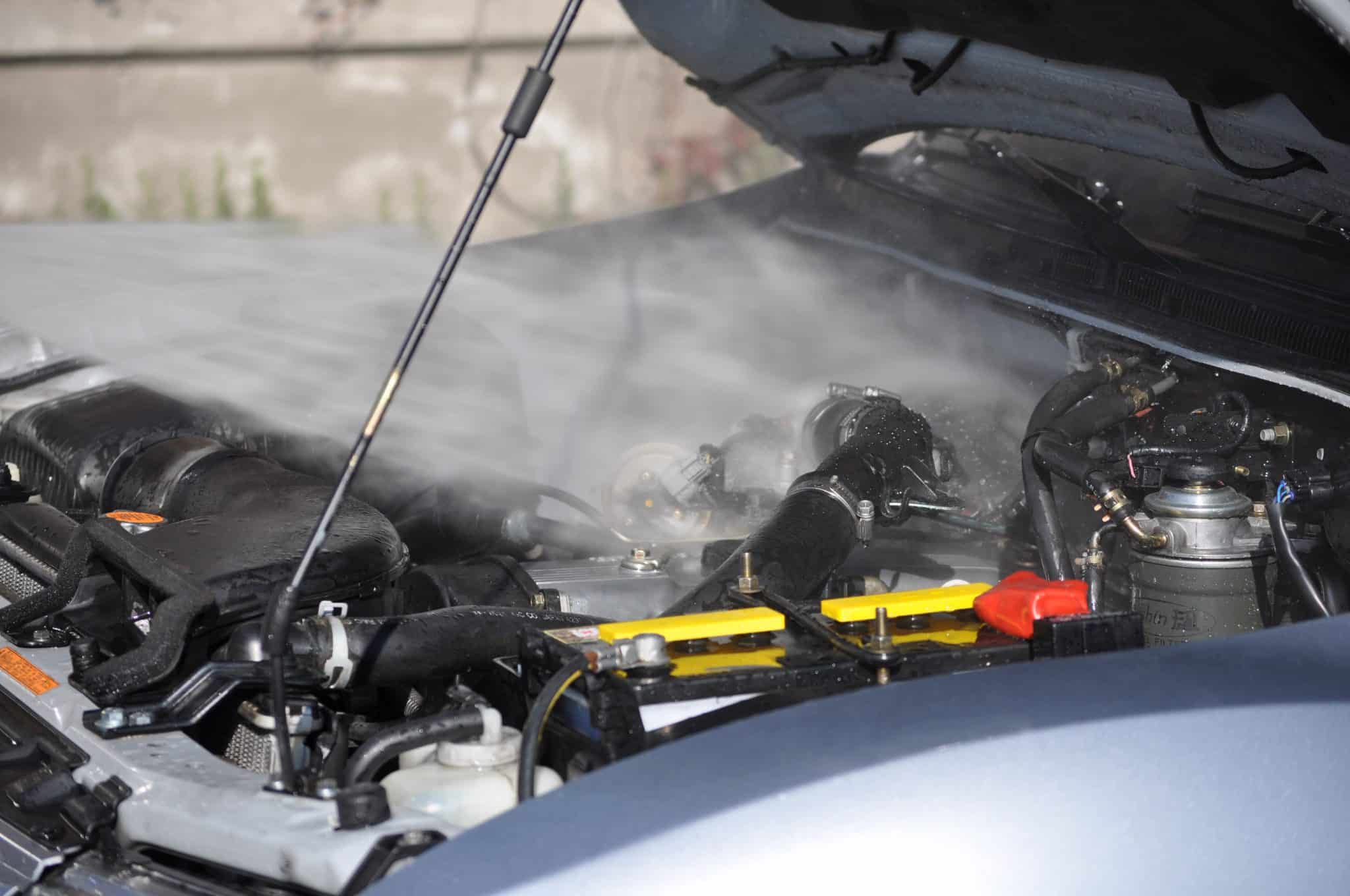
Why clean an engine bay (honest version)
A clean engine bay makes leaks easier to spot, looks better at sale/trade-in, and is standard on dealer lots. A cleaner bay may shed heat a bit better when heavy oil/dirt blankets are gone. Treat big MPG or “prolongs engine life” claims as possible side benefits, not promises.
Risk is real: water in the wrong place can create no-starts and expensive diagnostics. If you’re unsure, pay a pro or practice on a beater first (the old “Shop Dart” idea still works).
Disclaimer
You use these tips at your own risk. We are not responsible for damage to your vehicle. When in doubt, stop and get professional help.
Gear that helps
| Tool |
Role |
| Degreaser suited to engines |
Does the real work, so you need less water |
| Pressure washer with moderate PSI, low GPM |
Rinses without flooding |
| Or: garden hose used sparingly |
Possible, slower, still chemistry-led |
| Plastic bags + clips / purpose covers |
Air intakes, fuse boxes, sensors as needed |
| Soft brushes |
Agitate without tearing wires |
| Microfibers |
Wipe residual |
Hot water / “steam jenny” style washers speed degreasing when you have them. Cold water works if chemistry dwells properly.
Water rule: less is more
Home hoses often dump lots of gallons at low pressure. Light consumer pressure washers often run ~1.5–1.7 GPM at higher PSI, which is better for a controlled rinse if you keep your distance and avoid sensitive areas.
Rough working range many detailers use: about 1,000–2,000 PSI with low GPM and good degreaser. That is not a license to bury connectors. Closer isn’t always better.
Step-by-step (engine off unless you’re trained otherwise)
- Cool engine. Hot manifolds + cold water is a bad mix for people and parts.
- Photograph the bay so belts/covers go back right.
- Cover intakes, open electrical connectors, and sensitive boxes as needed.
- Apply degreaser per label; dwell without letting it dry into a crust on hot parts.
- Agitate heavy areas with a soft brush.
- Rinse lightly from a safe distance: short passes, not a flood.
- Uncover, wipe pools of water, leave the hood open to dry.
- Inspect for new drips after a short drive once fully dry.
Running vs not running
Shops have used both methods over the years. Stronger modern degreasers often mean less water, which reduces the temptation to run the engine during rinse. If you don’t have training and a practice car, keep it off, cover carefully, and rinse gently. No debate-winning claims here. Safety first.
Common mistakes
- Soaking the alternator / fuse box / open connectors
- Using dish soap habits that leave residue
- Point-blank wand on sensors and aftermarket electronics
- Cleaning a red-hot engine
- Skipping covers because “it looks sealed”
- Dressing belts/hoses with oily shine products that sling
Safety notes
- Eye protection and gloves.
- Watch for hybrid/EV orange cabling. If you see high-voltage markings and you’re not trained, do not spray that bay yourself.
- Never mix random chemicals.
- Dispose of oily rinse water per local rules. Don’t send it to the storm drain.
- Mobile operators: confirm customer OK; note pre-existing bay condition with photos.
Related guides

by Lance Gurganus | Dec 24, 2019 | Mobile Services, Detailing Business
Mobile Services for Auto Detailing
When I think back about how I started my detailing businesses, I did it the old fashioned way.
By old fashioned I mean I opened my own fixed location shop with a bunch of overhead. Those ‘hard’ costs that are difficult to adjust or eliminate because you need them.
I’m talking about things like building rent and utilities.
When you have an auto detail shop, you need the fixed location shop part to actually do business. And all the utilities are a cost you incur while doing the work.
Things like electricity to run the tools and lights. Water for basically everything.
And gas… Can’t forget about the damn natural gas bill. Pittsburgh winters are brutal. And heating garage bays and offices are expensive in winter.
Overhead Can Kill a New Business
Overhead can kill a new business. And building rent and utilities is second only to employee payroll as far as the largest numbers in the expense column of your P&L (profit and loss) statement.
They say hindsight is 20/20, but if I had to do it all over again I would skip the fixed the shop location and go straight to offering mobile detailing services.
The obvious place to start in this industry is by offering mobile detailing just based on the lower cost of equipment and easier training.
You really need to consider some of the other mobile services that the auto reconditioning industry has available though. Going from simple detailing and car washing to high-end auto reconditioning services will amaze you when you see the difference in profits.
I’m talking about the really profitable mobile services such as:
Mobile Detailing Services – the obvious first place to start
Commercial Fleet Cleaning – when you are ready for higher volume and more profits
Heavy Equipment Cleaning – a fantastic niche business that some do exclusively
Pressure Washing Services – expand your services using your existing equipment
Specialty Cleaning Services – another way to profit from your existing skills and tools
These mobile services are a great place to start. This is also a great way to add profitable mobile services to your existing detailing business if you already have one. Either way, reconditioning mobile services is a fantastic way to add profits and expand your skills in your community.
by Lance Gurganus | Nov 30, 2019 | Commercial Services, Detailing Business, Marketing, Mobile Services, Technology
Disclosure: This page has affiliate links. If you buy through them, Autodetailguide.com may earn a commission at no extra cost to you. As an Amazon Associate, we earn from qualifying purchases.
Mobile detailing equipment = your “rig”
Your truck/van/trailer plus the tools inside is the mobile rig. If the rig can’t wash, vacuum, and finish on site, you don’t have a mobile business. You have a wishlist.
These are hard-won shop lessons on weight, vans versus trailers, freezing and theft. Pair it with the starter kit ladder.
Open trailer vs closed trailer vs cargo van
| Option |
Upside |
Downside |
| Open trailer |
Cheapest entry if you already tow |
Freeze pain (antifreeze rituals), theft risk, weather exposure |
| Closed trailer |
Gear locked, easier winter protection |
Still towing; parking garages and tight lots hurt |
| Cargo van (often best) |
Drive-park-work; lockable; heater on extension cord in driveway winters |
Upfront cost; payload discipline required |
In many markets, a 1-ton-class cargo van (a full-size Express, Transit or Sprinter-class van, any model year that fits your budget) beats dragging an open trailer every day.
Weight math you cannot skip
Water weighs about 8.34 lb per gallon.
Example: 200-gallon tote ≈ 1,668 lb of water, plus tote, plus people, plus pressure washer, vac, chemicals.
Do not treat “one ton” as 2,000 lb of free cargo. Use the door-jamb GVWR, subtract real loaded curb (van + driver + helpers + gear + water), and stay under GVWR. When in doubt, weigh the loaded rig at a public scale.
Safe hauling is a daily habit, not a one-time spreadsheet.
Core equipment categories
- Water system: tote size matched to payload; fill plan; winterize plan
- Pressure washer: PSI/GPM suited to wash + foam cannon (see foam cannon guide)
- Foam / wash: cannon, mitts, buckets, grit guards, wheel-separate tools
- Vacuum / interior: portable or onboard; soft brushes
- Chemicals: wash soap, APC, glass, wheel cleaner; know dilution
- Power: inverter/generator plan if needed; amps before impulse buys
- Safety & pro extras: PPE, cones, mats, first aid, fire extinguisher
Cold weather & security (still true)
- Open trailers in freeze climates mean antifreeze in the plumbing, and that is miserable work.
- Unsecured gear near job sites walks away.
- Vans: lock it; in winter, a small controlled heater on a proper cord (fire-aware) beats frozen pumps.
- End-of-day unload of an open truck after fleet work is how people quit.
Process before toys
A DA polisher does not fix a chaotic wash bay in a van. Dial:
- Arrival → water/power → foam wash → dry
- Interior vac → wipe → glass
- Photo → invoice → next site
Then add correction, ceramic, or odor services when skill and insurance match the promise.
Safety notes
- Never exceed GVWR.
- Secure loads so tanks and washers can’t shift in a hard stop.
- Electrical: GFCI awareness around water.
- Chemicals: gloves/eyes; don’t mix random products.
- Customer sites: permission for hose bibs; mind landscaping and runoff rules.
Related guides

by Lance Gurganus | Oct 30, 2019 | Mobile Services
Mobile Detailing Services
When I think back about how I started my own detailing company I can’t imagine not setting up with mobile detailing services first.
No fixed facility shop, low overhead, no utilities, no property/building insurance, etc.
There are just so many positives that I can’t figure out why people get the idea to start an auto detail shop and don’t consider the mobile detailing services as an option.
Yes, you do have some drawbacks like being controlled by the weather. You can work around that with a pop-up canopy or an inflatable mobile garage. Setting up a mobile detailing service costs some money, but tools like these let you control those variables better.
These tools let you keep working through more kinds of weather, which helps the tent pay for itself.
When you begin offering mobile detailing services, you need the basics of any detailing business:
- mobile detailing van: a 3/4-ton or 1-ton cargo van (Chevy Express 2500 or 3500, Ford Transit, Ram ProMaster) sized to your water load. Check the door-jamb GVWR before you add a water tank.
- mobile detailing equipment – pressure washer, generator, portable water buffalo, a variable-speed rotary polisher (up to about 3,000 RPM) and a dual-action polisher like the Porter-Cable 7424XP (about 2,500 to 6,800 OPM)
- detailing supplies
- detailing business insurance
- detailing business forms for your transactions. Being organized doesn’t just benefit a business offering mobile detailing services, it’s a great idea with any business.
- credit card merchant account – the most inexpensive way to do this is to set up a free PayPal Business account online
- uniforms, mainly a professionally produced t-shirt with your company logo on it and khaki shorts or clean jeans with no holes.
As I asked you in another section of the site, do you have garage keepers liability insurance? See our Detailing Business Insurance page for more information on the types of insurance you need for your business. General liability alone won’t cut it, you need garage keepers liability to cover the vehicle while in your care, custody, and control. Ask your insurance agent about this.
After insurance, mobile detailing equipment, and other miscellaneous detailing supplies, you need to make sure your business has its own checking account separate from your personal account.
This is to make sure your business funds are separated from your personal money. This will definitely benefit you when it comes to tax time and you give your receipts and bank account statements to your accountant.
When you first start out with a mobile detailing services business, you may think your costs are high but you will quickly see how profitable you become as you begin to see more customers.
Pick a legal structure
The other thing you need to decide is the legal structure of your mobile detailing business. The usual choices:
- Sole proprietorship. You and the business are the same for legal and tax purposes, so your personal assets are not separated from business debts and lawsuits.
- LLC (limited liability company). A business entity formed under your state’s law. It can help separate business liabilities from your personal assets if you keep business and personal money apart. For federal taxes, a single-member LLC is treated like a sole proprietorship by default, and a multi-member LLC like a partnership, unless it elects otherwise (IRS: LLCs).
- Corporation. A separate entity formed under state law, with more formalities.
An S corporation is a tax election, not a type of business you form. An eligible corporation, or an eligible LLC, can elect S corporation status by filing IRS Form 2553 (IRS: S corporations). Owners who work in an S corporation generally must pay themselves a reasonable salary through payroll before taking other distributions (IRS: S corporation compensation). That adds payroll costs and paperwork, so the election makes more sense for some businesses than others.
An entity does not replace insurance. You still need the right detailing insurance either way. Talk to a CPA and an attorney before you choose; they can look at your income, your state’s fees and taxes, and your risk.
Frequently asked questions
Is an S corp better than an LLC for a detailing business?
They are not the same kind of thing. An LLC is a business entity formed under state law; an S corporation is a federal tax election that an eligible LLC or corporation can make with Form 2553. Whether it helps depends on your profit and payroll costs, so ask a CPA.
Mobile Detailing Services don’t have an enormous amount of liability as long as you are properly insured. You always want to be protected as much as possible though.
Offering Mobile Detailing Services is a very profitable business but you need to make sure you are organized on the back office side before you can make money on the service side.
You can make a ton of money performing services for people, but if you don’t know where your money is going for expenses like supplies, equipment, insurance, payroll, and other business costs, you won’t end the year with much money in the bank.
I have talked to guys who thought they were doing great and they now say the worst part of it all was that they were basically bankrupting themselves with all their expenses, but they didn’t discover that they were broke until several months after because they were too busy trying to make money.
Don’t let that happen to you. Mobile Detailing Services are profitable, but it is still hard work and it is still a business. Run it well and it will reward you well.