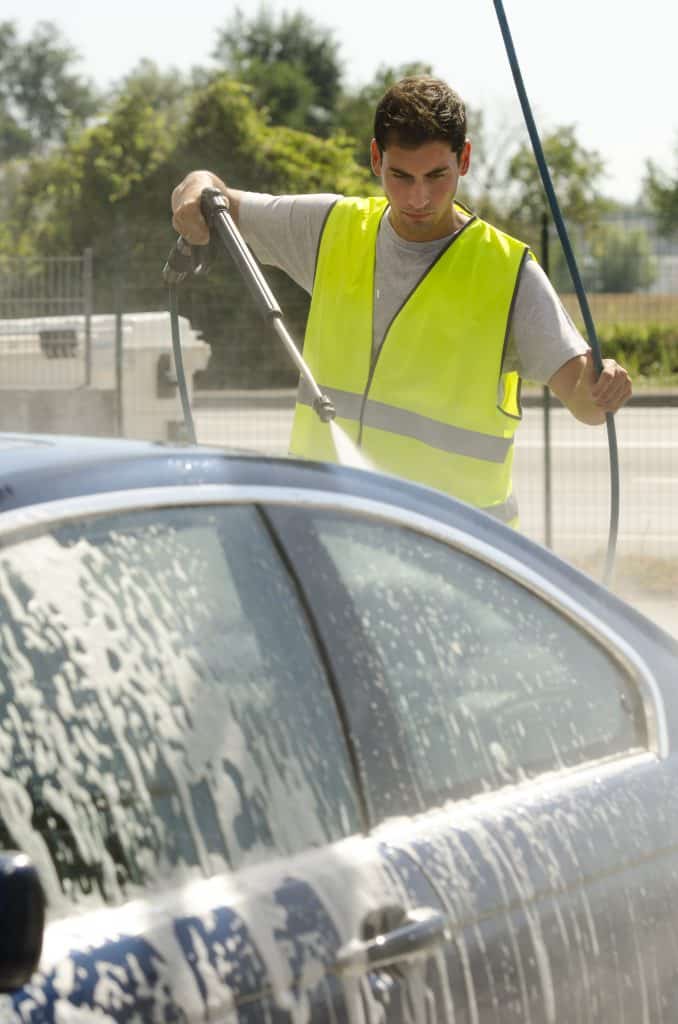
Liability insurance is important for businesses of all sizes. Photo Credit: Adobe Stock
What is Garage Keepers Liability Insurance?
As a professional business owner, it’s important to understand the different types of insurance that your business needs.
Some types of insurance coverage are very different from others. So you might think that standard liability insurance would cover you and your business from damages that you or your employees cause, but you would be mistaken.
Especially if the damage happened while you were in control of your customer’s vehicle. In that situation, you want to know about garage keepers liability insurance and how it can help protect you and your business.
Veterinarians shouldn’t be delivering babies. Make sure the right experts are giving you advice about insurance.
Pro Tip: Specialty commercial insurance should only be offered by experienced brokers. Your agent might be great at personal auto insurance, but asking them for Garage Keepers Liability Insurance is like asking a veterinarian to deliver a baby. Sure, they can probably do it, but don’t you want more of an expert for something that important?
AutoDetailGuide.com
In this article, we are going to cover a few important aspects of general liability coverage and answer the question of What is Garage Keepers Liability Insurance and how can it help you.
We will learn about Garage Keepers Liability Insurance. What it is. What it is not. And why your business needs it.
Discuss the differences between Garage Keepers Insurance and standard liability insurance.
Both car detailers with fixed location shops and mobile detailers need to consider Garage Keepers Insurance.
Discuss the need for the right insurance coverage for the type of services that you offer.
So let’s get started.
What is Garage Keepers Liability Insurance?
Garage Keepers is a very specific liability insurance policy designed for businesses that work with vehicles or equipment in a garage setting. This type of policy offers insurance protection for your business from liability arising from damage claims caused by you or your employees while conducting your professional services.
These types of liability policies protect your business by extending insurance coverage onto the customer-owned vehicles in your care, custody, and control. That is the 3 C’s that I reference in my article on the subject of auto detail liability insurance.
Sometimes it’s better to talk to a specialist that understands your specific needs.
How is Garage Keepers Insurance Different from Other Liability Insurance?
Standard Liability Insurance protects your business from a long list of other potential issues. Everything from advertising liability to a customer slip and fall in your waiting room.
Garage Keepers insurance extends coverage to customer vehicles while under your care, custody, and control. So if your shop burns down with a customer vehicle inside, Garage Keepers insurance would be the policy you need to help with those claims.
Clearly, it’s important to contact your insurance agent or broker to discuss which types of liability insurance coverages are best for your business.
The differences between the types of liability coverage boil down to what is required to protect your business and customer vehicles while you and your employees are in control of their property.
When you look at the different insurance coverages from this perspective, it makes it easier to understand why you might need to have both in force protecting your business.
Car Detailers Need Garage Keepers Insurance
There are many reasons why car detailers and mobile detailing businesses need garage keepers liability insurance. All of these reasons come down to one issue. How much time is a customer vehicle under your control when there’s a chance it could be damaged?
While you are working on customer vehicles in your garage, there are many times it can be damaged. Think about all the services you offer. Car detailing, washing, buffing, removing paint overspray, engine cleaning, heavy equipment cleaning, paint chip repair, essentially all the reasons that the customer would hire your business.
Customer Vehicles are Protected
All of these services have the potential for causing accidental damage to a customer-owned vehicle. It’s important to make your customers aware that their valuable vehicles are protected while under your care, custody, and control.
Garage Keepers Liability Insurance is the financial protection device that allows you to extend that peace-of-mind protection to your customer.
Cost is obviously an issue for any detailing business. Unfortunately, Garage Keepers coverage can get pricey depending on many factors. Everything from how long you’ve been in business, your claims record, the physical location of your business, and numerous other factors that your insurance agent can discuss with you in more detail.
Mobile Detailers Need to Consider Garage Keepers Insurance
Another item worth mentioning is mobile detail businesses will need to be very specific with your insurance agent about exactly how you perform your services on customer vehicles. The answers to your questions will determine the type of insurance coverage you may need.
It all comes down to how are the cars moved? Do you move them or do your customers? Do you ask the customer to move the vehicle for you? Do you drive the vehicle? Even if you are mobile and set up in a business parking lot, you may still need to move your customer vehicle to another spot after you are done doing work on it.
Mobile detailers also need to consider Garage Keepers Insurance
Get the Right Coverage For Your Services
Any of these questions might seem insignificant, but it’s important to tell your insurance agent everything you do so they can offer you the right coverage for the services that you offer.
You might not think it’s a big deal until an employee crashes your customer’s car into several others while moving it across a parking lot. Or accidentally hits another car while pulling out of a driveway.
Problems Happen
Problems happen. All the time. Insurance allows you to focus on your business instead of trying to anticipate those potential problems and protect yourself from the costs associated with paying to fix damages that were caused by your business.
Garage Keepers Liability Insurance is a Valuable Tool
Garage keepers liability insurance is a valuable tool to help keep your business profitable so an occasional accident doesn’t destroy everything you’ve worked so hard to build. You should discuss this with your commercial insurance broker and allow them to quote you prices for comprehensive coverage to protect you and your business.
Every car you touch is someone else’s expensive property. One slip with a rotary polisher or one fender bender on the way back from a dealer, and you pay out of pocket unless the right policy is in place. This page is general information, not insurance or legal advice. A licensed agent has to match coverage to your business.
The coverage most detailing businesses look at
Coverage
What it is for
Who usually needs it
General liability (GL)
Injuries to other people and damage to their property caused by your work or at your location, like a customer slipping on a wet floor
Every detailer
Garage keepers
Damage to customers’ vehicles while they are in your care, custody and control
Every detailer who works on or moves customer cars
Commercial auto
Your work van or truck, and accidents while driving for the business
Mobile detailers, anyone who drives for work
Hired and non-owned auto (HNOA)
Liability when you or employees drive rented or personal cars for the business
Anyone whose team drives cars the business doesn’t own; ask your agent whether driving customer or dealer cars is covered
Tools and equipment (inland marine)
Theft or damage to pressure washers, generators, polishers and supplies on the road
Mobile detailers
Business owner’s policy (BOP)
Bundles GL with property coverage for your shop and equipment
Detail shops with a fixed location
Workers’ compensation
Medical bills and lost wages for injured employees
Anyone with employees (rules vary by state)
Umbrella
Extra limits above GL and auto
Dealer and fleet accounts that require higher limits
Why general liability is not enough
A standard general liability policy usually excludes damage to property in your “care, custody or control.” A customer’s car on your lift or in your bay is exactly that. That gap is what garage keepers coverage is for (what is garage keepers liability insurance).
Garage keepers usually comes in three forms:
Legal liability: pays only when you are legally liable for the damage.
Direct primary: pays for covered damage to the customer’s car whether or not you were at fault.
Direct excess: pays regardless of fault, but only after the customer’s own auto insurance pays first.
Ask your agent which form you are buying and what the per-vehicle and per-location limits are. Make sure the limit covers the most expensive car you take in.
Don’t use personal auto insurance for business
Personal auto policies often exclude or limit coverage when the car is used for business, like hauling a pressure washer and water tank to job sites every day. If you drive for the business, tell your insurer and get commercial auto or a business-use endorsement. Moving dealer or customer cars raises its own questions about plates and coverage; see detailer transporter plates.
Tell the insurer the truth about your business
Describe every service you sell: detailing, paint correction, ceramic coating, window tint, pressure washing, specialty cleaning. Each one can carry a different class code and premium. If a claim comes from work the policy doesn’t list, it may not be covered. Update your agent when you add services or a new location.
Certificates of insurance
Dealers, fleet managers, property managers and apartment complexes will ask for a certificate of insurance (COI) before you work for them. A COI is a one-page summary of your policies and limits from your agent. Some customers will also ask to be named as an additional insured on your general liability policy. Your agent can issue both, sometimes for a fee. Keep a current COI as a PDF on your phone so you can send it the same day.
Employees, 1099 contractors and cash workers
How you pay people matters for insurance and taxes.
The IRS decides contractor vs employee by the facts, not by the paperwork. It looks at three areas: behavioral control (do you control how the work is done?), financial control (who pays for tools and supplies, and can the worker make or lose money?), and the relationship (benefits, a written contract, whether the work is a key part of your business) (IRS: independent contractor or employee). A detailer who works your schedule, uses your equipment, wears your shirt and works only for you looks a lot like an employee. See our guide to 1099 independent contractor vs employee.
Asking contractors for their own liability insurance and workers comp is smart business, but it is not an IRS test by itself. Get a COI from every subcontractor before they work on a customer’s car.
Will your policy cover contractors? It depends on your policy. Many workers comp insurers audit payroll at the end of the policy year and may charge premium for subcontractors who could not show their own coverage. Ask your agent how your policies treat subcontractors before you hire one.
Cash and under-the-table workers are a risk on both counts. If one gets hurt or damages a car, you may have no coverage, and you may owe back payroll taxes and penalties. Pay people properly. States use their own tests for workers comp and unemployment, and they can differ from the IRS test. If you aren’t sure how to classify someone, ask a CPA or an employment attorney before you pay them.
Workers’ compensation
Workers comp pays medical bills and part of lost wages for employees hurt on the job, and usually includes employer’s liability coverage. Most states require it once you have employees, but the rules and thresholds vary. For example, Pennsylvania generally requires employers to cover their employees, with narrow exceptions (Pennsylvania Workers’ Compensation Act), while Texas allows most private employers to opt out as “nonsubscribers” with notice requirements (Texas Department of Insurance). Check your state’s workers comp agency.
What detailing insurance costs
Your price depends on your state, services, revenue, payroll, limits, deductibles and claims history. As one published example, Insureon reports these median premiums for car wash and auto detailing businesses that got quotes through it (as of November 2026) (Insureon):
General liability: about $54 per month ($1 million per occurrence, $2 million aggregate)
Business owner’s policy: about $89 per month
Commercial auto: about $46 per month
Workers’ compensation: about $131 per month
These are one broker’s medians, not quotes. Garage keepers is priced on your limits, the value of the cars you handle, and where they sit (inside or outside). Get at least two or three quotes from agents who write garage and auto service accounts.
Questions to ask your agent
Does my general liability policy exclude customer vehicles in my care, custody or control?
Which garage keepers form am I buying, and what are the per-vehicle and per-location limits?
Am I covered while working at a customer’s home or a dealer’s lot?
Am I covered when I or an employee drive a customer’s or dealer’s car?
Are my tools and equipment covered in the van overnight?
How does my policy treat subcontractors, and will I be audited?
Are paint correction, ceramic coatings, tint and pressure washing all listed on my policy?
How fast can you issue a COI or add an additional insured?
Frequently asked questions
What insurance do I need for a detailing business?
Most detailers start with general liability and garage keepers coverage. Add commercial auto if you drive for the business, tools and equipment coverage if you are mobile, and workers comp when you hire employees. A licensed agent should match it to your business.
Does general liability cover a customer’s car?
Usually not while the car is in your care, custody or control. That is what garage keepers coverage is for.
How much is insurance for a detailing business?
It varies by state, services and limits. Insureon reports median premiums for car wash and detailing businesses around $54 per month for general liability and $46 per month for commercial auto. Get real quotes.
Do mobile detailers need commercial auto insurance?
If you drive to jobs with your equipment, personal auto policies may exclude or limit business use. Ask your agent about commercial auto or a business-use endorsement.
Do I need workers comp for 1099 contractors?
It depends on whether they are truly contractors under the IRS and state tests, and on your policy. Get their certificates of insurance, and ask your agent how your audit treats uninsured subcontractors.